
There is a particular kind of stuck that only experienced men get into. Not beginners. Not the guy who just walked into a gym for the first time, nervous and unsure where anything is. That guy is actually in a pretty good position because he knows he doesn’t know anything and so he’s open to learning. The dangerous stuck belongs to the man who has been around long enough to have opinions. The man who has tried things, read things, heard things, and accumulated enough experience that he walks into any new approach with a head already full of what he thinks he knows.
I was that man for a long time. And being that man cost me years of results I could have had sooner.
“I was tired of being right about things that weren’t working.”
Here’s the honest version of my history before the contest that changed everything. I’d been lifting on and off for years. I understood, at least conceptually, how muscles worked. I’d tried multiple diets. I’d read articles. I’d watched videos. I had done enough that I felt like I had a working knowledge of what was required. And that working knowledge was exactly the problem. Because if my working knowledge was actually sufficient, I would have already looked the way I wanted to look. I didn’t. Which meant something I believed about what I was doing was wrong. But because I thought I knew enough, I kept doing variations of the same things and expecting different results. You know the definition of that.
The Decision That Changed Everything
Then at 53 years old I saw a local New York City trainer named Maik Weidenbach, a former Olympic swimmer and Wall Street dropout turned gym owner, running a physique transformation contest on Instagram. Best improved physique wins ten thousand dollars and a professional photoshoot. No age limit. I signed up. And here is the decision that made the difference, a decision so simple it almost sounds like nothing until you actually try to do it.
I decided to pretend I knew absolutely nothing.
The Entire Article in One Sentence
If I already knew how to get the result I wanted, I would already have the result.
Not as a performance. Not as false humility. As a genuine strategic choice made by a man who was tired of being right about things that weren’t working. If I already knew how to get lean and defined and muscular, I reasoned, then I would already be lean and defined and muscular. I wasn’t. Therefore, whatever I thought I knew was either incomplete, incorrect, or being applied wrong. So I was going to set all of it aside and follow the program exactly as written, without modification, without editorial, without the quiet internal commentary of a man who thinks he’s been around long enough to know better.
Maik gave me exercises that seemed, at the time, a little ridiculous to me. I did them anyway. Not grudgingly. Without judgment, because I had decided in advance that my judgment on this subject had already been disqualified by my own results. He prescribed rep ranges and rest periods and a nutritional structure that was more detailed and more demanding than anything I’d tried before. I followed it. He wanted me to weigh and measure and track every single thing I consumed for four months. I did it. Every meal. Every day. Without exception and without complaint, because I had committed to the program and I had already decided I didn’t know enough to override any part of it.
That last piece, the tracking, is where most men with experience quit. Not because it’s hard to understand. Because it’s inconvenient, and because men who think they have a general sense of what they’re eating convince themselves that general is good enough. It isn’t. General is the gap between effort and results for most men in this demographic. I know because general was my approach for years, and general efforts produced general results. The program required precision. I gave it precision.
“General efforts produced general results.”
Four months later I was at roughly eight percent body fat. I won the contest. I pocketed ten thousand dollars. And I had something more valuable than either of those things. I had a complete, functional understanding of how my body actually responded to training and nutrition when both were applied correctly and consistently over a sustained period of time. Not a theory. Not a concept. Proof, generated by my own body, that I could now use for the rest of my life.
What Is Beginner's Mind?
The beginner’s mind, which is a concept with roots in Zen philosophy that I didn’t know much about at the time and arrived at practically rather than intellectually, is simply the willingness to approach something you think you already understand as if you’re encountering it for the first time. Without the filter of prior conclusions. Without the ego investment in your existing approach being the right one. With the genuine curiosity of someone who has not yet decided what the answer is.
It sounds easy. Yet it is genuinely difficult for men who have been competent at other things for decades. Because competence in one area creates a default assumption of competence in adjacent areas. A man who has built a business, raised kids, managed people, and navigated complexity for thirty years has strong pattern recognition and good instincts. Those are real assets in most contexts. In the gym, when those instincts have already been tested and found insufficient, they become obstacles wearing the costume of wisdom.
“Those instincts have already been tested and found insufficient.”
The willingness to set that down, to say out loud or at least to yourself that you are going to treat this as if you know nothing and follow someone else’s guidance exactly, is an act of genuine intellectual courage for a man who has been capable and competent for most of his adult life. It feels like a demotion. It isn’t. It’s a promotion to the level of someone who is actually going to get results instead of someone who is going to continue being right about things that aren’t working.
“It feels like a demotion. It isn’t.”
This Is Not Blind Obedience
I want to make a distinction here that matters, because this is not an argument for blind obedience to any program or any person. It’s an argument for honest self-assessment before you start. The question isn’t whether you should follow a program. The question is whether the results you have produced so far (or past results not sustained) with your existing knowledge justify the confidence you bring to your next attempt. If the answer is no, and for most men reading this the honest answer is no, then the most productive thing you can do is set the existing knowledge aside, find someone who has produced the result you want and knows how to teach it, and follow their guidance without modification until you have your own evidence to work from.
After the contest, I had that evidence. Now when I train, when I structure nutrition, when I make decisions about phases and approaches and adjustments, I’m working from a foundation of things I have personally tested and proven rather than things I read about or partially applied. That’s a completely different position to operate from. And I couldn’t have gotten there without being willing to become a beginner first.
Unexpected Benefit
When you stop managing the program and simply execute it, you free up enormous mental energy that was previously spent second-guessing every decision.
There’s something else I want to say about the experience of following a program that precisely, because it surprised me and I think it will surprise you too if you do it. When you commit completely, without the mental energy going toward evaluating and second-guessing and modifying, something opens up. You’re no longer managing the program. You’re just doing it. And doing it turns out to be significantly more productive than managing it. The cognitive load of deciding whether you agree with each component, whether this exercise is really necessary, whether this rep range is optimal, whether you could substitute this meal for something more convenient, all of that disappears when you’ve made the decision in advance that you’re going to follow the program as written. What’s left is just execution. And execution, applied consistently over four months, produces results that years of managed effort never did.
“Doing it turns out to be significantly more productive than managing it.”
That was the lesson. Not that Maik’s program was magic. Not that I needed someone else to figure things out for me permanently. That I needed to build a foundation of real evidence before my opinions were worth trusting. And the only way to build that foundation was to set the opinions aside long enough to actually run the experiment correctly.
After the contest, I had that evidence. Now when I train, when I structure nutrition, when I make decisions about phases and approaches and adjustments, I’m working from a foundation of things I have personally tested and proven rather than things I read about or partially applied. That’s a completely different position to operate from. And I couldn’t have gotten there without being willing to become a beginner first.
One Honest Question
Am I willing to pretend I know nothing?
If you’ve been around the gym for years and you still don’t look the way you want to look, I’d ask you to sit with one honest question before your next attempt. Not what program should I try. Not what am I doing wrong. Just this: am I willing to pretend I know nothing?
Because that decision, made honestly and held completely, is worth more than any program you could pick.
It’s a practical decision made by a man who is tired of being right about things that aren’t working. And if that sentence lands for you the way it landed for me when I finally admitted it to myself, you might be closer to the result than you think.
Work With Norm
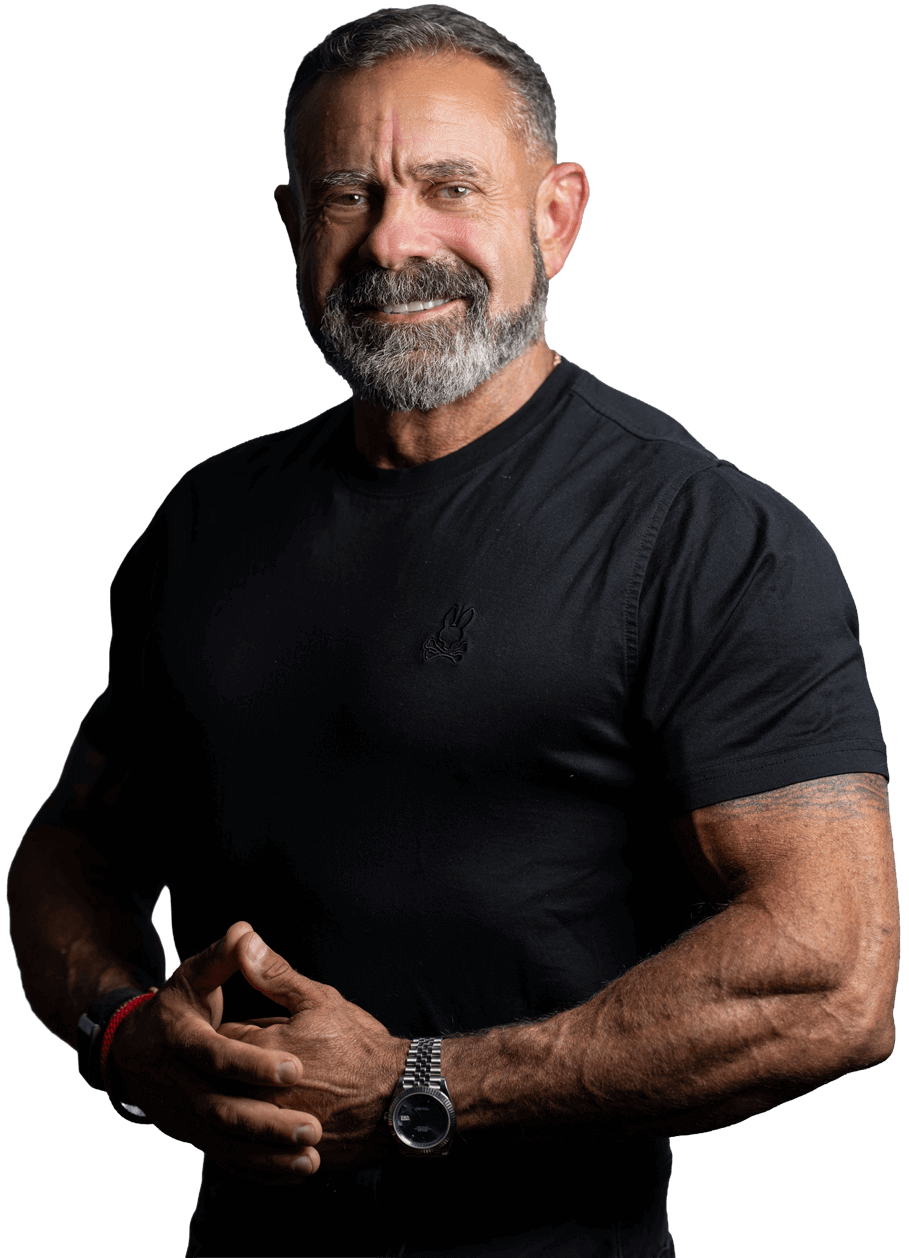
Norm Rieger is a men’s lifestyle coach, speaker, and author of The New Norm, a book about building the body and life you want by training the mind first.
If you’re ready to stop managing your approach and start executing one that actually works, book a one-on-one coaching consultation.